Effective Feedback
This past month my 6th graders have been working on videos in iMovie using photos and video I took of them completing a Science lesson. They handed them in last week after grading themselves using the rubric for the assignment. I then watched each one and graded it, stapling my rubric under theirs.
As I was grading them I realized that there were a lot of places for improvement. Rather than me taking the time to meet with each group individually I set aside a few classes as film reviewer sessions. We watched everyone's movie and gave positive feedback and constructive criticism. I modeled the first few comments and then let them try it. What ensued was the most effective feedback session I've witnessed in a while, adults included. They said things like, "I think your music was good, but your text went too fast." They even were able to take the feedback without trying to justify or respond. The proof of the power of these feedback session was when I let them return to their projects to work on them based on the feedback they'd gotten. I was blown away by how some students completely reorganized their images or deleted all of their text and changed it. Some re-recorded their opening videos or added smoother transitions. This is a new group of students for me and it is their first attempt at an iMovie project. I was really proud of them. It took 2 1/2 class periods, but the self-assessment skills they learned were worth the time. I foresee these skills carrying into other projects as they review their final products. Here is an example of one of the projects: Do you have any examples of using effective feedback with your students? A Lunar Lesson: Approaching the Two-Step Model
My grade partner happens to be our 6th grade teacher, since there's only one of her in the building and she's right across the hall. She and I have been collaborating a lot this year, and her students see me 3 times a week. She and I also share a love of Science, which has been very exciting.
Today, she brought her students over to the lab to use our Promethean board for a lesson on the Phases of the Moon. They have been studying Astronomy, but many of the students lack basic knowledge about the solar system. We decided to present the information in an interactive way using a flip chart and multimedia. (She had been using a pencil and a tin can to show them how the moon orbits the Earth.) What ensued was a lesson that mirrored the two-step Constructivist model I've been reading about. Before the lesson began, we made sure that we knew what the learning objectives were. For this lesson they were very simple:
 Step 1: The Exploratory Phase Students brainstormed what they knew already about the Moon. They then read through some facts, watched a video and a flash animation and then pulled the phases of the moon in order on the Promethean board to reinforce what they had learned about the names of the phases as well as vocabulary like 'waxing,' 'waning,' 'gibbous' and 'crescent.' During this phase, we paused a few times to check for understanding, and then at the end we had each student write down and then tell us one thing they had learned. We didn't grade them on the lesson, but we made sure to address any misconceptions, providing interventions as needed (when they didn't understand the concept of the Sun as a bunch of mini 'explosions' we showed them a National Geographic video) and checking for understanding. The purpose of the Exploratory Phase is to use activities, dialogue and interventions to support and assess student learning, understanding and interest. Step 2: The Discovery Phase  I was very proud of my colleague, who had never used the Promethean Board before, but handled it with ease. I also think that our students will go home today with a much better understanding of the moon's phases as well as a deeper understanding of why and how they occur. I wouldn't be surprised if they look up more often at night to see what phase the moon is in! This is what learning looks like. One of the students asked, "Is this going to be one of those one-day things again?" We have had a few hands-on, interactive and fun-filled lessons with technology and Science that have lasted only one day due to the nature of the curriculum and pacing schedule. I said, "I hope not." In the back of mind I thought: he gets it. Even my student knows what real learning is. And he's craving it. More Adventures in Checking for Understanding
I'm almost halfway through a wonderful book, Applying Standards-Based Constructivism: A Two-Step Guide for Motivating Elementary Students. It has given me a lot of practical advice and it has given me a better understanding of some of my instructional practices and methods and at the same time justifies practices I've been doing for years.
I will write more about the Two-Step model later, but today I wanted to briefly reflect on a new method for checking for understanding that I found in the book. In the section on Assessment, the book stresses that teacher observation really is a valid form assessment because (gasp) teachers are professionals and are the most qualified to determine whether and how their students are learning. The authors describe how you can easily gauge student understanding by having each student take 10 seconds to say one thing they learned at the end of class.
Part of the success I had today was due to the fact that I had clearly outlined the learning objectives at the start of the period and limited them to a few observable behaviors (put one space between each word, center a heading, use return key, use capitals and periods). I was easily able to know whether the students had learned what I wanted them to in a matter of minutes. I am still amazed by Geoffrey Canada's bold statement that he was a 'Master' teacher in his 5th year of teaching. I feel like this year, my 6th year of teaching, I am finally 'getting it' when it comes to assessment. It's a messy process, but I'm loving it. I can't wait to see what I'm working on 6 years from now. My First Experiment with Checking for Understanding
I just finished reading Checking for Understanding by Nancy Frey and Douglas Fisher. It is one of the most practical books I have read in a while. In it I found techniques that I could immediately apply in my classroom.
Assessment is a huge challenge for me. I see most of my students 45 minutes a week and I teach about 300 students over the course of a week. As a previous post discussed, I have recently been working on the learning goals and focus of my lessons and projects. Now that I have semi-solved that issue I am now working on assessment. This year I also have a new classroom setup with an Interactive Whiteboard (IWB) at the front of the room and the computer facing it. This makes it impossible for me to see the student screens if I'm demonstrating something at the front of the room (we don't have wireless, so a wireless computer controlling app for the iPhone is a no go). In my former labs I didn't even have a wall to project on, so all demonstration had to happen through Apple Remote Desktop on the students screens. As a result, part of the challenge this year is getting used to a new classroom configuration. These changes and realizations have caused me to be extra reflective in what I do and why in the classroom.
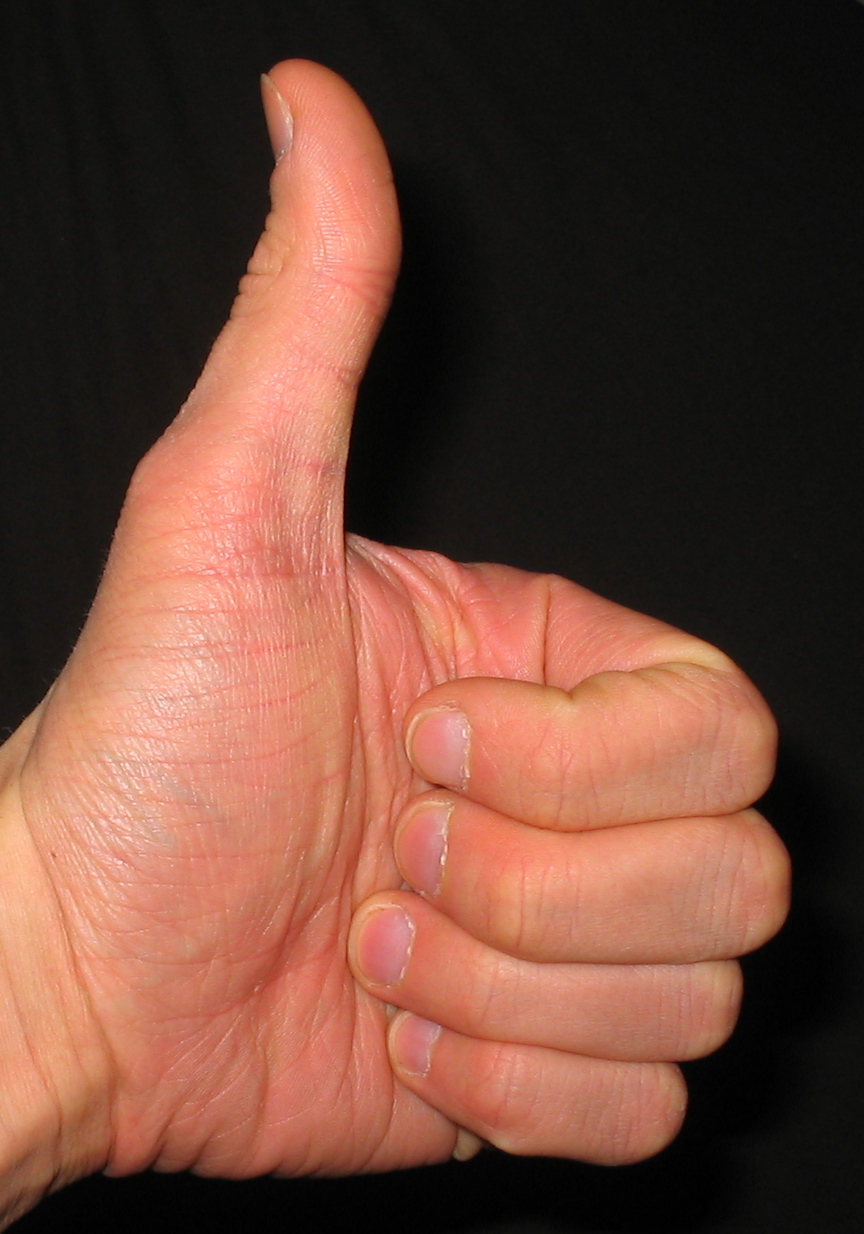
It has worked wonders for checking that everyone 'gets' what we are doing. I have found more of my students retaining the steps and more capable of applying their knowledge to other functions of the program. One of my 4th graders exclaimed today, "Ms. Hertz, I can insert a picture all by myself! I did it!" Of course, even a simple sounding procedure such as thumbs up/thumbs down needs to be practiced, so I'm excited at the possibilities for ensuring that my students are getting the base skills I want them to have so we can begin to push toward more complex, content-based projects.  In addition to these assessment goals, I have been clearly stating the learning goals at the beginning of the class period and restating them at the end. For instance, "Today you will....." and "Today we......" I've found it makes ME even better reflect on what we accomplished for the day. A big factor, I believe, in my ability to implement these new practices is that, now in my 4th year teaching in a lab, I have most of the big stuff down so I can now focus on more reflective practice than before. I also have a school climate that is more organized and more predictable than my previous 5 years. This gives me more time to focus on my students, not on the fact that there are 5 teachers out and I have to cover a class for 3 hours. I'm excited to keep trying new ways to check for understanding and to focus on how and what my students are learning in a more organized, deliberate and meaningful way. EduPunks
My friend, Tom Whitby, an educator and blogger has put out a call for blog posts centered around positivity in education to counter all of the negativity going on. I recently wrote a post on the Cooperative Catalyst blog called "What (Really) Works," trying to focus on what works in education rather than what doesn't.
I refuse to get caught up in the "what's broken" conversations. It's the same reason I rarely sat in the lunchroom at my former schools. Sure, we all need some group therapy every once in a while, but when we focus too much on the negative, we start to lose sight of why we do what we do. So I invite you, whether teacher or parent or community member, to be an 'Edupunk.' Don't get sucked into negative conversations. If the people around you are talking about how schools are failing kids, how we are behind other countries in test scores, how we should fire bad teachers and expand charters, I challenge you to bring up the fact that there are lots of successful schools doing amazing things with students and teachers who are dedicated to doing whatever it takes not to raise student test scores but to raise students' consciousness and give them meaningful educational experiences that will prepare them not for a test or a job but for life. If you need examples of some of these schools, districts and teachers, here are a few examples:
So rather than focus on the media, let's be Edupunks who go against the negativity and do what's best for kids. If we talk enough about what works and what's working, we might actually get somewhere.
Subscribe to:
Posts (Atom)
Creative Commons License Philly Teacher by Mary Beth Hertz is licensed under a Creative Commons Attribution-Noncommercial-No Derivative Works 3.0 United States License. Subscribe To
 Posts
All Comments My Visitors
About Me
Edcamp Philly Organizer
Learning Today Blogger of the Week
I'm a Diigo Educator
I Heart Storybird
|